Where do I start?
Since I was a little kid, I knew that I wanted to be some kind of tinkerer
, I've always been the kind of tech nerd that likes to disassemble any sort of mechanism, understand how it works from the inside and then test my understanding about it by reassembling it just to see if it works as it did before I mangled it.
Research gave me a big opportunity to adjust this abstract concept into something do-able in our modern (advanced-ish) society where you cannot just "invent the lightbulb" or "discover the gravity"; that, plus my will to do things for the better & my sense of fulfilled when I help someone makes the environment of Professor-Researcher look like a dream to me, which in practice, has proven me to fit in my very soul desires as good as a glove.
I'm a computer scientist and researcher specializing in timing synchronization, kernel-level development, and hardware-software co-design. My work spans software-defined systems, OS-level timing solutions, and multi-FPGA synchronization with a focus on precision and reliability in constrained environments.
Outside of research, I'm a firm believer that curiosity is the best debugging tool which is the same one that leads me to take things apart and put them back together, whether it's a kernel module or a new album. I've been doing both since before I knew what a set of computer instructions were, and that hasn't changed much.
I'm committed to advancing communications technologies and empowering others through education. I believe that working towards solutions with the sole purpose of helping each other is what brings society to great places and I stand by that with technology: building tools and infrastructure that bring connectivity and innovation to underserved communities.
Relocating to Europe for PhD - Summer 2026
alejandra.carreon[AT]ale-leehrtz.org
ale.leehrtz[AT]gmail.com
My work sits at the intersection of hardware timing, OS-level systems, and telecommunications infrastructure. The common thread: understanding how things work, breaking them down, and putting them back together better.
How do you make independent systems agree on what time it is, down to the nanosecond? I build GPS-independent solutions that work in constrained, real-world environments using PLLs, MMCM phase correction, White Rabbit-inspired protocols.
GSM networks, E1 synchronization, community telephone systems. Who gets connectivity and who doesn't is often a technical problem with a social answer.
The boundary between software and hardware is where the interesting problems live. FPGAs, PCIe, host synchronization; precision is won or lost at that interface.
The kernel is where timing constraints actually get enforced or violated. Custom drivers, interrupt handling, and real-time control logic are where I do some of my most careful work.
My technical work sits at the intersection of hardware timing, OS-level systems, and telecommunications infrastructure. Languages: native Spanish, fluent English, basic French and German.
A running feed of events, experiments, and field notes; from FPGA bring-up logs to conference recaps. Updated as things happen.
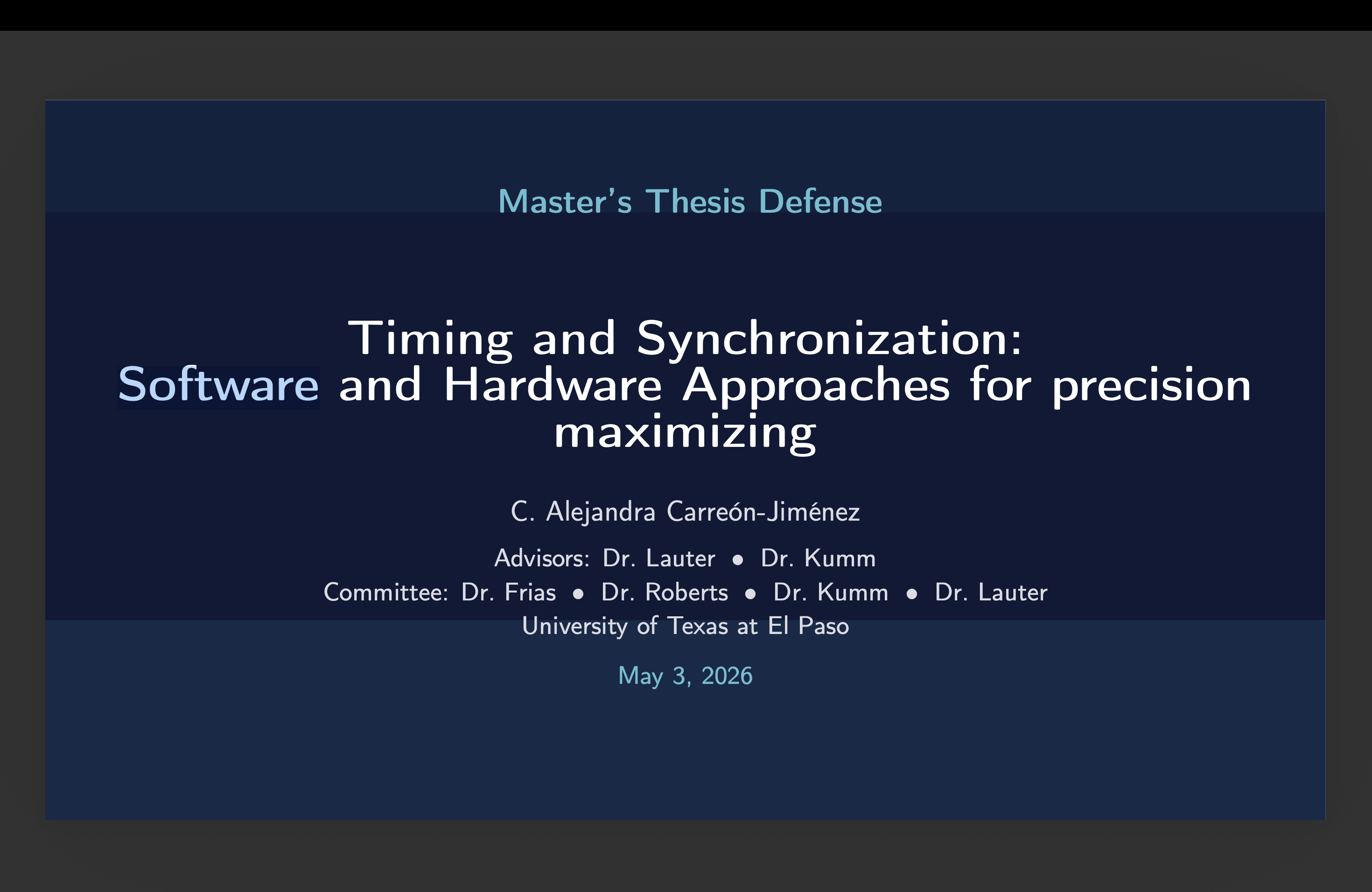
Successfully defended "Timing and Synchronization: Software and Hardware Approaches for Precision Maximizing" at UTEP. Work spans a GPS-independent SD-RI-PLL for E1 synchronization, host–FPGA PCIe synchronization achieving ~190–226 ns RTT, and multi-FPGA mesh topologies with sub-nanosecond skew in simulation. Advised by Dr. Christoph Lauter (UTEP) and Dr. Martin Kumm (Hochschule Fulda).
Research, Timing, FPGA, Kernel
Accepted and attended the IEEE ARITH Summer School in El Paso, TX. Participated in workshops on computer arithmetic, connected with researchers in the field, and received program recognition.
IEEE, Research, Computer Arithmetic
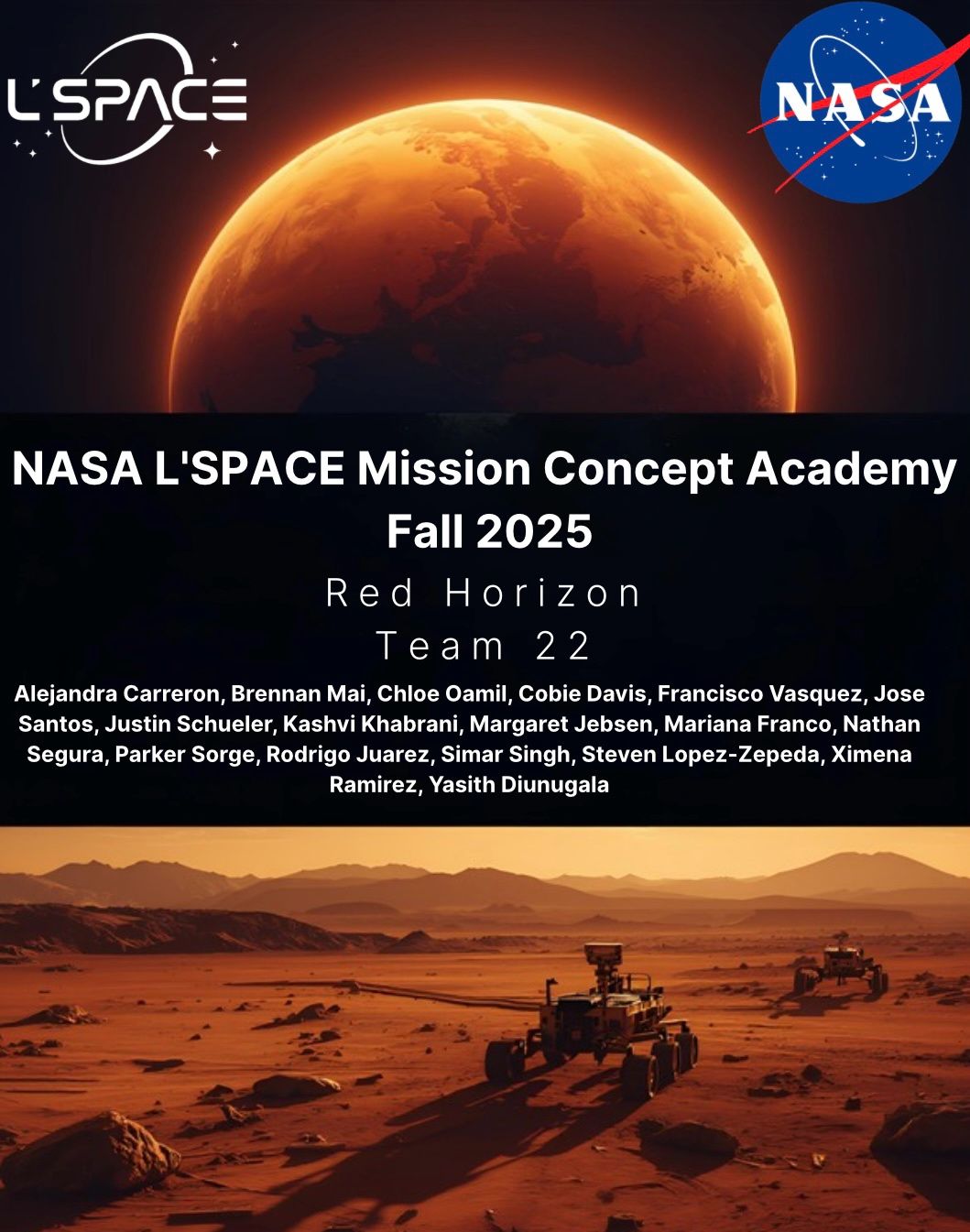
Selected as Planetary Geologist on Team 22 of NASA's L'SPACE MCA program. Worked on designing a Mars surface exploration robot searching for CHNOPS biosignatures to assess potential habitability of the Martian surface.
NASA, Planetary Science, Research
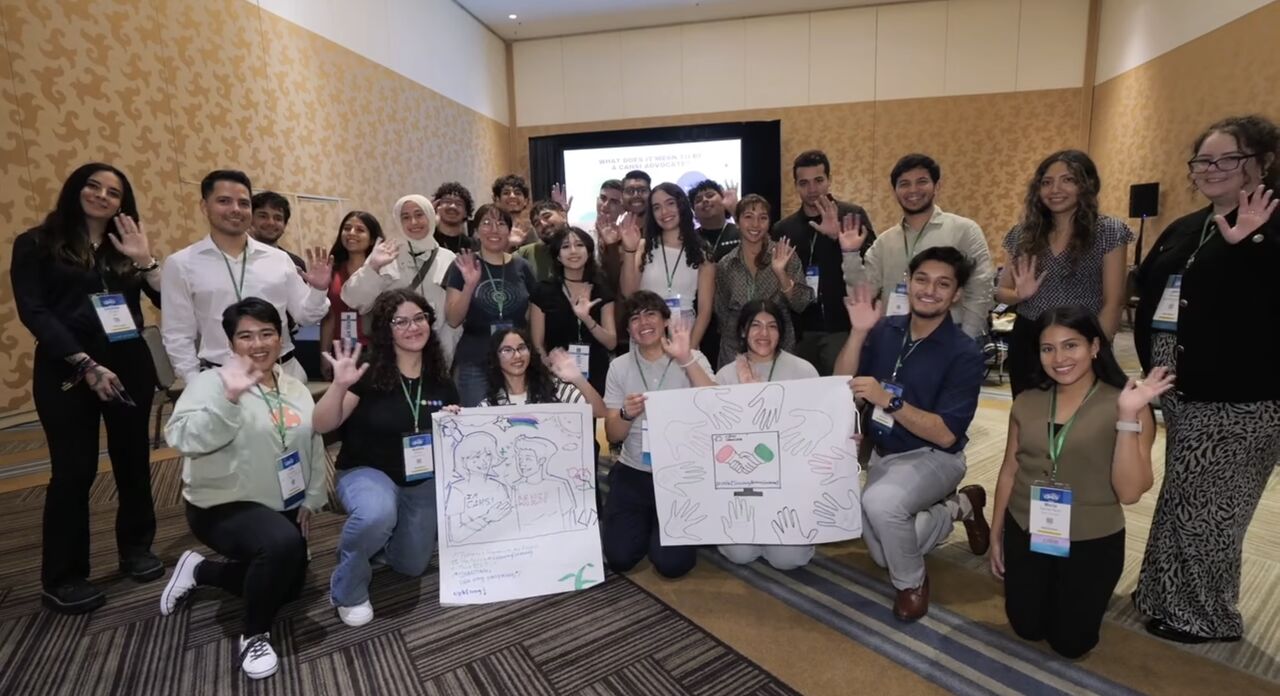
Served as regional mentor-connector for graduate students across Southwest HSIs. Delivered the talk "Networking: Important or Not?", tracked advocate progress across universities, organized workshops, and built bridges between students and opportunities in the region.
CAHSI, Mentorship, Leadership
Attended as CAHSI Southwest Graduate Advocate. Co-hosted a talk, ran a workshop for local chapter advocates from universities across the region, and participated in a hackathon.
GMiS, CAHSI, Event
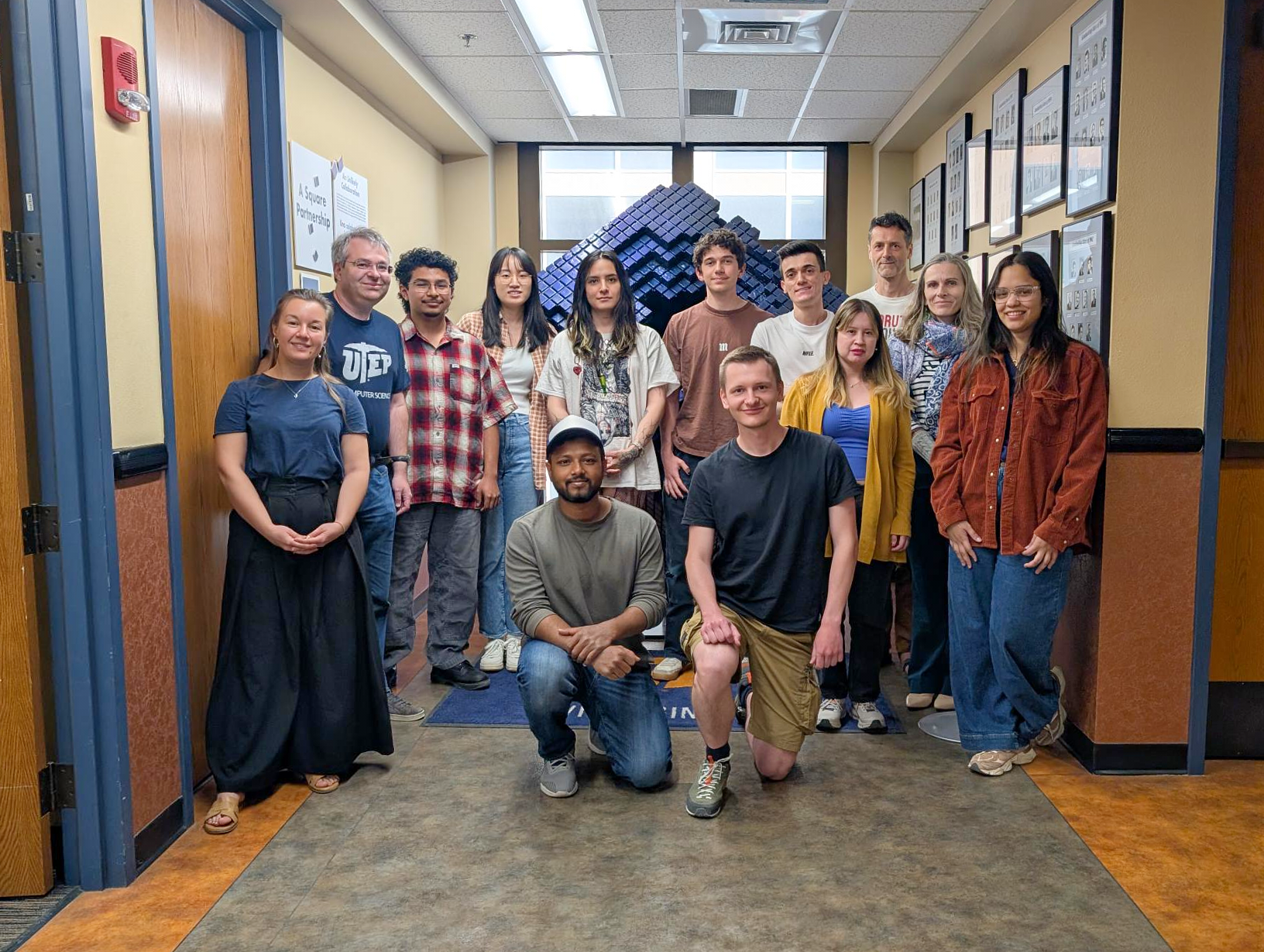
Founded the Web/App Development Club at UTEP to fill a gap in the CS curriculum where no web development community existed. Built a team of 10+ officers and instructors, ran workshops, hackathons, and coding sessions. One instructor landed an internship directly through the club.
Leadership, Education, Community
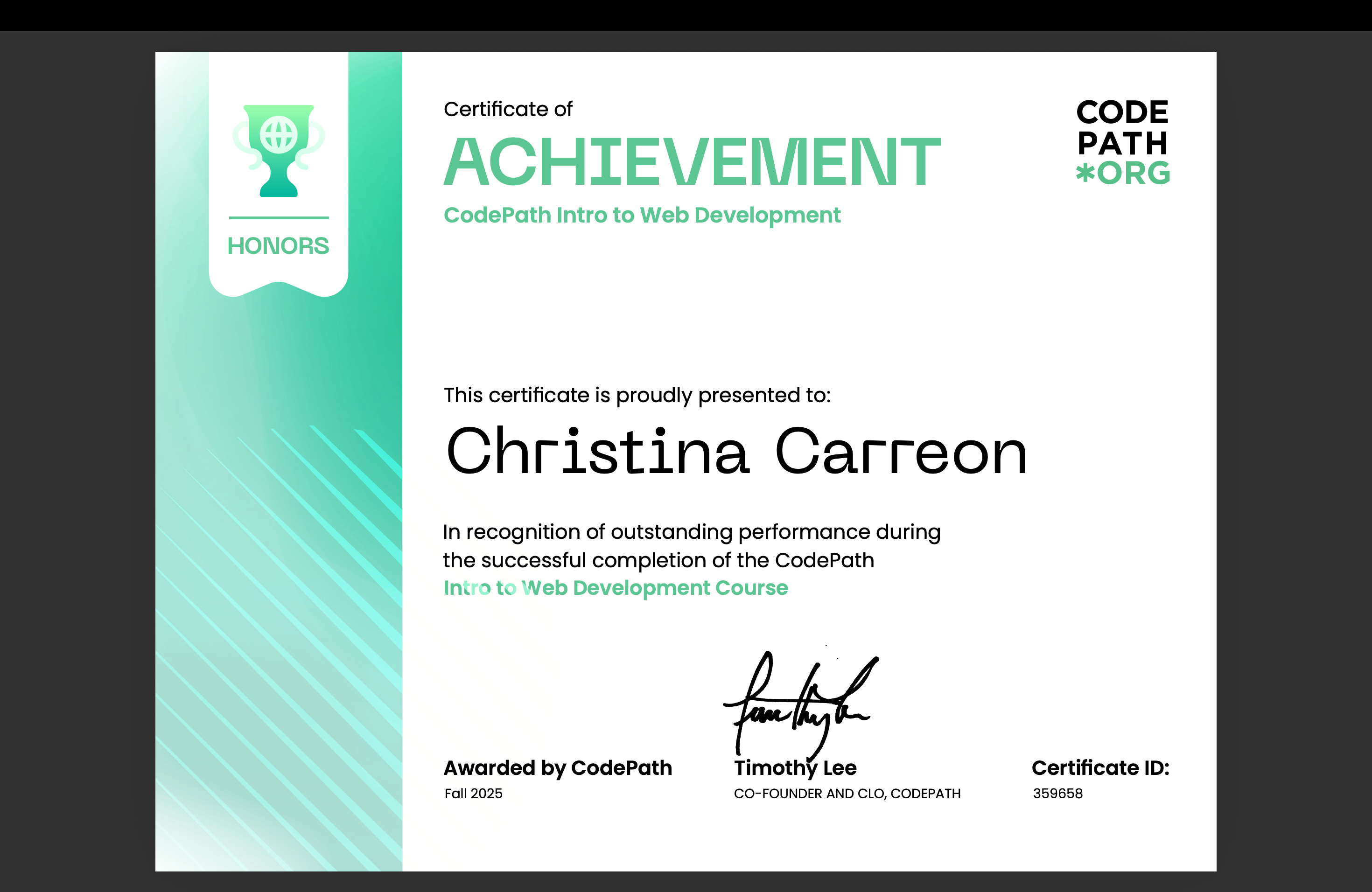
Completed coursework in OS development and web development through Codepath's technical programs.
OS, Web Development, Education
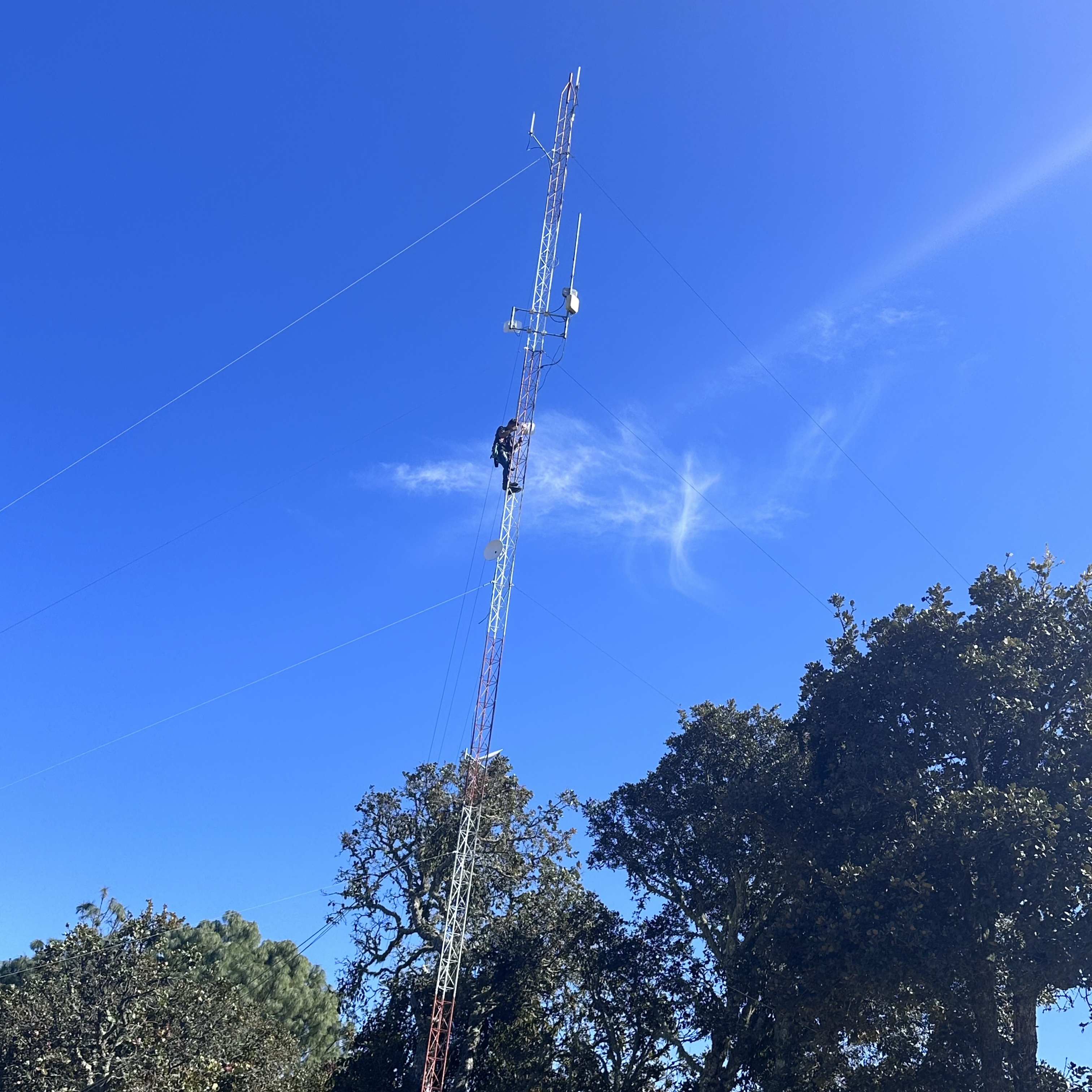
Supervised undergraduate students developing a web UI for administration of community GSM network infrastructure operated by Rhizomatica/TIC-AC in Oaxaca. Traveled to Oaxaca in 2024 for field research, working directly with the communities the system serves to understand their real operational needs.
GSM, Telecom, Community, Research
Received an honorary recognition from the state of Guanajuato for the results achieved at the World Educational Robotics European Open in Spain the previous year.
Recognition, Robotics, Mexico
Competed in the World Educational Robotics European Open in Spain with a self-funded team; Mexico alone hadn't sent enough teams so we registered under the Spain division and covered the trip out of pocket. Took home 1st place individual, Award of Excellence, and 3rd place group.
Robotics, Competition, InternationalWhether you'd like to talk about research, propose an idea, or share a good album I'm just an email away.
Email:
alejandra.carreon[AT]ale-leehrtz.org
ale.leehrtz[AT]gmail.com